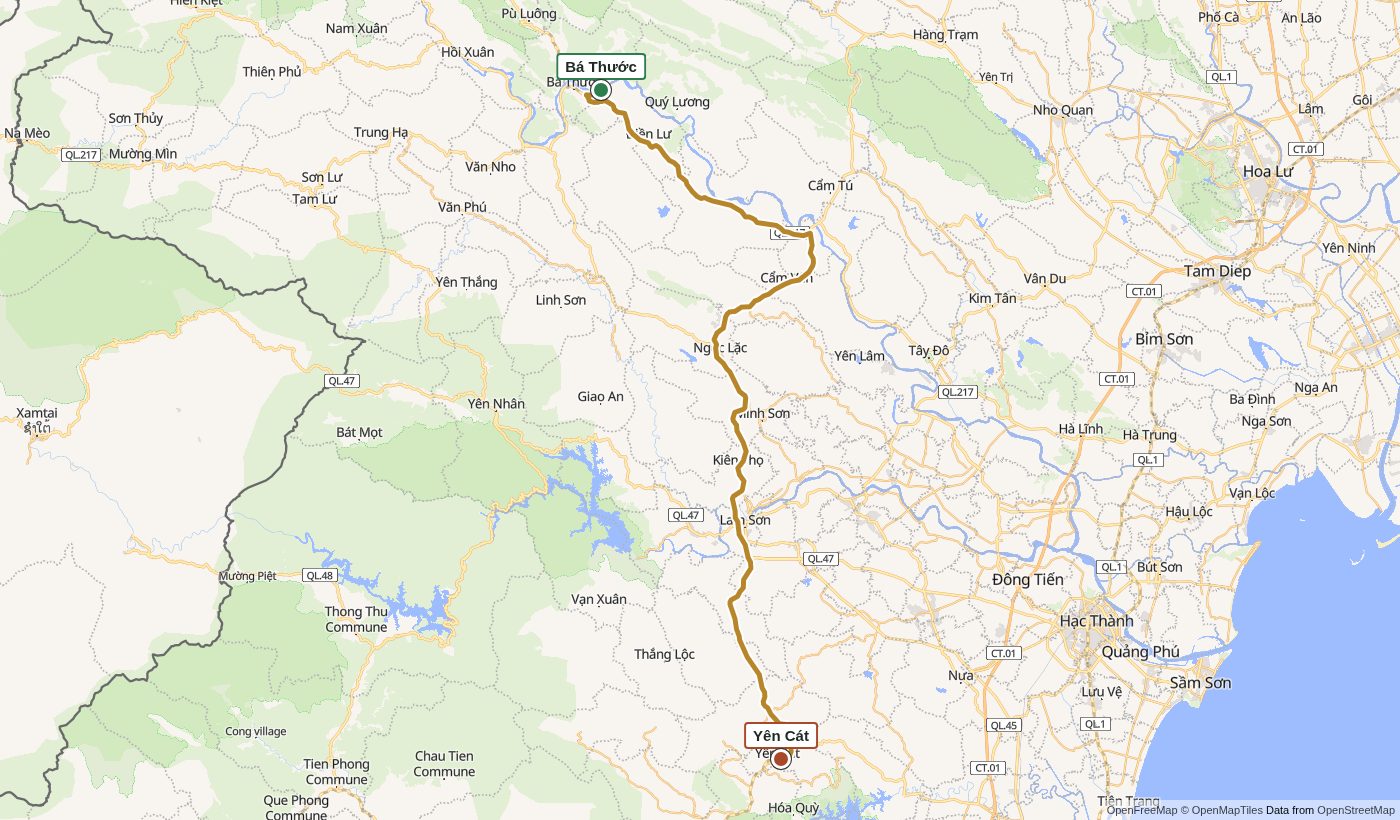
Setting
You follow the Mã river valley through Cẩm Thủy and Ngọc Lặc to the edge of the Thanh Hóa plain, then south-west to Yên Cát (Như Xuân).
Story
Lam Kinh, just off the route, is the home of Lê Lợi. From 1418 to 1427 he led the Lam Sơn uprising that drove out the Ming, and he founded the Later Lê dynasty in 1428. The site includes the tombs of the early Lê kings and covers about 200 ha. It forms a pair with Chi Lăng on Day 7, where his army won the decisive battle.
People
Mường, Thái and Kinh, with Thổ around Như Xuân. In parts of Ngọc Lặc more than 70 per cent of people are Mường.
What makes it special
Lam Kinh is one of the great royal sites of Vietnam and sees very few foreigners.
The peoples in more detail
Along the way: Mường, Thái, Kinh; Thổ around Như Xuân.
Mường
The closest relatives of the Kinh, sharing the same root language. Mai Châu is a mix of Thái and Mường, and Bá Thước is one of the old Mường heartlands.
Food: Steaming is the signature technique: sticky rice, plain rice, greens and fish are all steamed.
Thái (Tai Dam, Tai Don)
This is the people of the Days 16–24 valleys. Black Thái live around Sơn La and Điện Biên, and White Thái around Mai Châu.
Food: Sticky rice steamed in a wooden steamer is the traditional staple, though plain rice is now the everyday grain.
Kinh (Việt)
The majority people, about 85% of the country. In the mountain towns most shopkeepers and officials are Kinh.
Food: Wet rice is the foundation of everything.
Thổ
A Vietic people of the Thanh Hóa and Nghệ An hills. The main Thổ districts, such as Quỳ Hợp and Nghĩa Đàn, lie a little south-east of your Days 21–22 route.
Food: Once sticky rice, now mostly plain rice.
Military history and figures
Military history
Lam Sơn, near Lam Kinh, is where Lê Lợi launched his ten-year rising against the Ming in 1418. Lam Kinh was later built here as the Lê dynasty’s sacred capital and tomb site.
Linked figures
- Lê Lợi (Lê Thái Tổ, 1385–1433).
- Lê Lai (d. 1418?), who dressed as Lê Lợi and charged the Ming lines so his leader could escape. He is honoured with Lê Lợi at the anniversary rites.
- Nguyễn Trãi (1380–1442), Lê Lợi’s strategist and author of the Bình Ngô đại cáo.
Practical notes
- Lam Kinh royal site (Lê dynasty) just off the route near Lam Sơn. Accommodation in Yên Cát not checked.