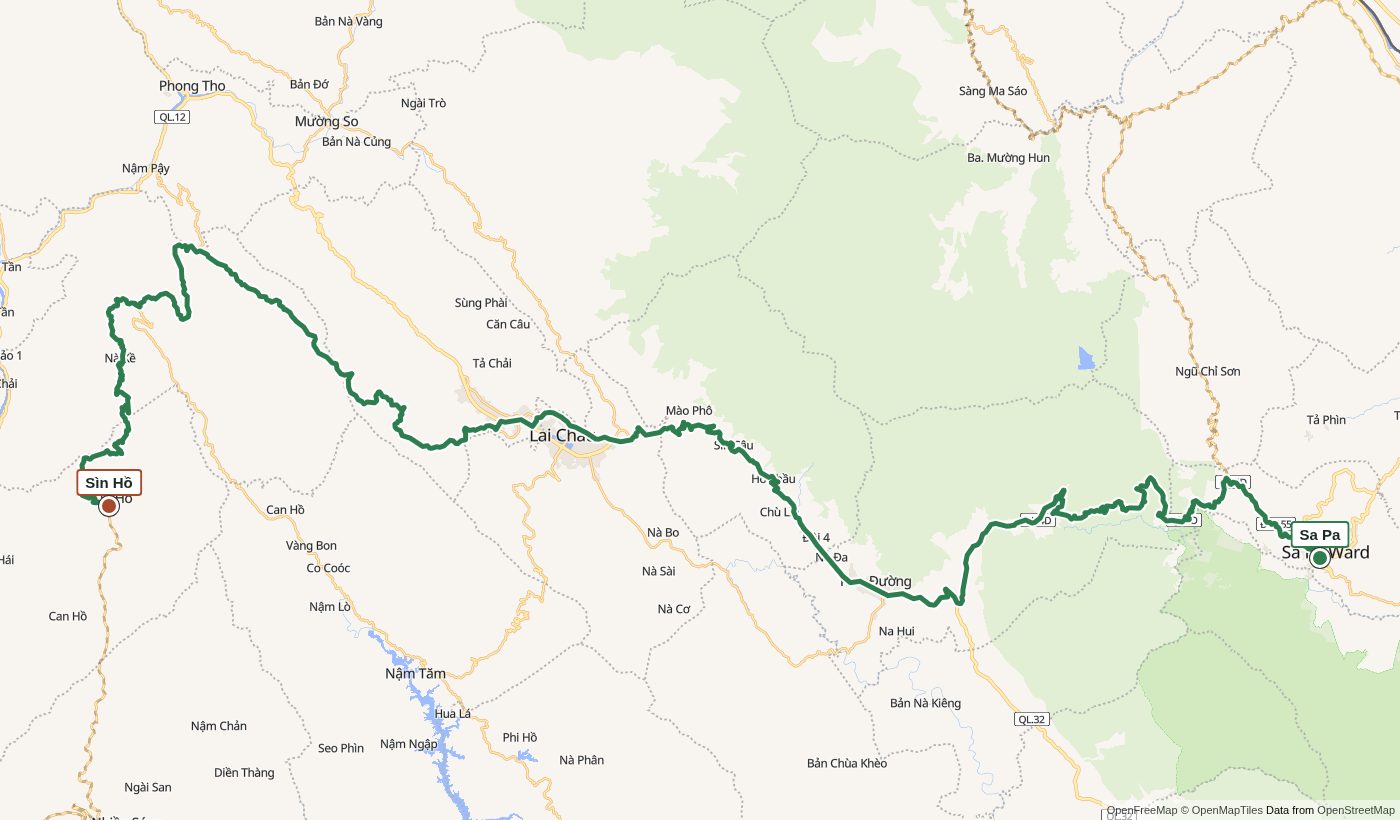
Setting
You cross the Hoàng Liên Sơn range over Ô Quy Hồ pass, at about 2,000 m and nearly 50 km long. The road then comes down through Tam Đường and Lai Châu city and climbs again to the Sìn Hồ plateau, at around 1,500 m.
Story
Ô Quy Hồ is the “king of passes” of the north-west. It is a climatic divide: the dry, warm western slope of the Hoàng Liên range faces the cool, damp Sa Pa side. Sìn Hồ is called the “roof of Lai Châu”, and the district borders Yunnan.
People
Lự (at Bản Hon, near Tam Đường), Thái, Hmong and Dao. The Lự are a small Tai-speaking group of Buddhist origin, known for their weaving.
What makes it special
This is the highest pass on the tour. The Lự village of Bản Hon is one of the few places in Vietnam to meet this community.
The peoples in more detail
Along the way: Lự (Bản Hon), Thái, Hmong, Dao.
Lự (Lue, Tai Lue)
A small Tai people with Theravada Buddhist roots. They are known for their brocade weaving and swordsmiths.
Food: Sticky rice and plenty of fish, including a sour salad of raw fish.
Thái (Tai Dam, Tai Don)
This is the people of the Days 16–24 valleys. Black Thái live around Sơn La and Điện Biên, and White Thái around Mai Châu.
Food: Sticky rice steamed in a wooden steamer is the traditional staple, though plain rice is now the everyday grain.
Hmong (H'Mông, Mèo, old name, now avoided)
The people you'll see most in the high country. They make up about 72% of the Đồng Văn plateau and about half of Sa Pa, and Mường Lống is entirely Hmong.
Food: Two meals a day, three at harvest.
Dao (Yao, Mien)
A large group with many branches, each with its own dress. In Bình Liêu you'll see Dao Thanh Y and Dao Thanh Phán, around Ba Bể the Dao live on the hillsides, at Bắc Hà market Black Dao come in, and in Sa Pa and Hoàng Su Phì there are Red Dao, with red pom-pom headdresses.
Food: Two main meals a day, of rice or, in some places, maize or rice porridge.
Military history and figures
Military history
Lai Châu’s Phong Thổ district, north of today’s road, was another 1979 invasion axis.
Linked figures
None of national note.